
Greer Parole and Probation Compared
Oklahoma divides the decision and supervision roles. The Oklahoma Pardon and Parole Board considers parole cases and issues decisions or recommendations. Oklahoma Department of Corrections Probation and Parole Services supervises eligible people in the community. A parole grant does not erase the sentence. The person has left prison under terms and remains subject to ODOC authority until discharge or another lawful end of supervision.
Probation is different. A court may order it with a suspended sentence under 22 O.S. §991A, so a person can begin probation without serving an ODOC prison term. The sentencing court sets the legal basis, and ODOC may supervise the case. A jail release record may show the physical exit, but the judgment and sentence explain why probation applies.
| Record point | Parole | Probation |
|---|---|---|
| How it begins | Conditional release from prison after official action | Court-ordered community supervision, often tied to a suspended sentence |
| Decision source | Pardon and Parole Board, and the Governor where required | Sentencing court |
| Greer supervision | ODOC regional office serving Greer County | ODOC regional office when assigned to ODOC supervision |
| Best proof | Board result plus ODOC custody and supervision record | Court judgment plus ODOC supervision confirmation |
| Final end | Discharge, expiration, or another official termination | Completion or court-ordered termination, shown in the case and agency record |
- Parole
- Conditional release from prison while a sentence and supervision continue.
- Probation
- Court-ordered supervision in the community, often without a state-prison release.
- Discharge
- The official end of a sentence or supervision term.
- Absconder
- A supervised person alleged to have stopped reporting or left supervision without approval.
Verify Greer Post-Release Supervision
Start with identity, not a similar name. The ODOC Offender Lookup can show a DOC number, photograph, birth date, current or inactive location, and sentence rows. Open the detail and compare the sentencing court and criminal-file number. An inactive status is only a clue. It does not by itself show whether the sentence ended, parole remains active, or the person moved between ODOC settings.
- Search by DOC number when known. Otherwise use the name and compare the photo, date of birth, aliases, and court data.
- Read each sentence row. Look for the right Greer case, reception information, discharge date, and any supervision context.
- For parole, search the Board docket and matching result. A scheduled docket is not a release record.
- Contact the Altus office with the DOC number to verify that it is the responsible Greer County office and ask what can be disclosed.
- When records conflict, request the ODOC incarceration and supervision chronology instead of guessing from an abbreviated screen.
The broader Greer County released inmate search explains how to separate a county-jail exit, an ODOC transfer, and a true community release. That distinction matters because the sheriff roster does not track an OSR parole case.
Greer Parole Office Is Altus
Greer County has no separately published Mangum probation and parole office. ODOC assigns Greer with Jackson and Harmon counties to its Altus regional office. The office supervises cases; it does not grant parole, set Board meetings, or replace the sentencing court. Bring or provide the DOC number when possible because it is safer than relying on a common name.
Altus Probation and Parole Office
1200 E. Tamarack Road
Altus, OK 73521
(580) 482-7609
Serves Greer, Jackson, and Harmon counties
The official directory capture shows the regional office entry that covers Greer County release supervision.
View the ODOC probation and parole office source before relying on a saved contact.
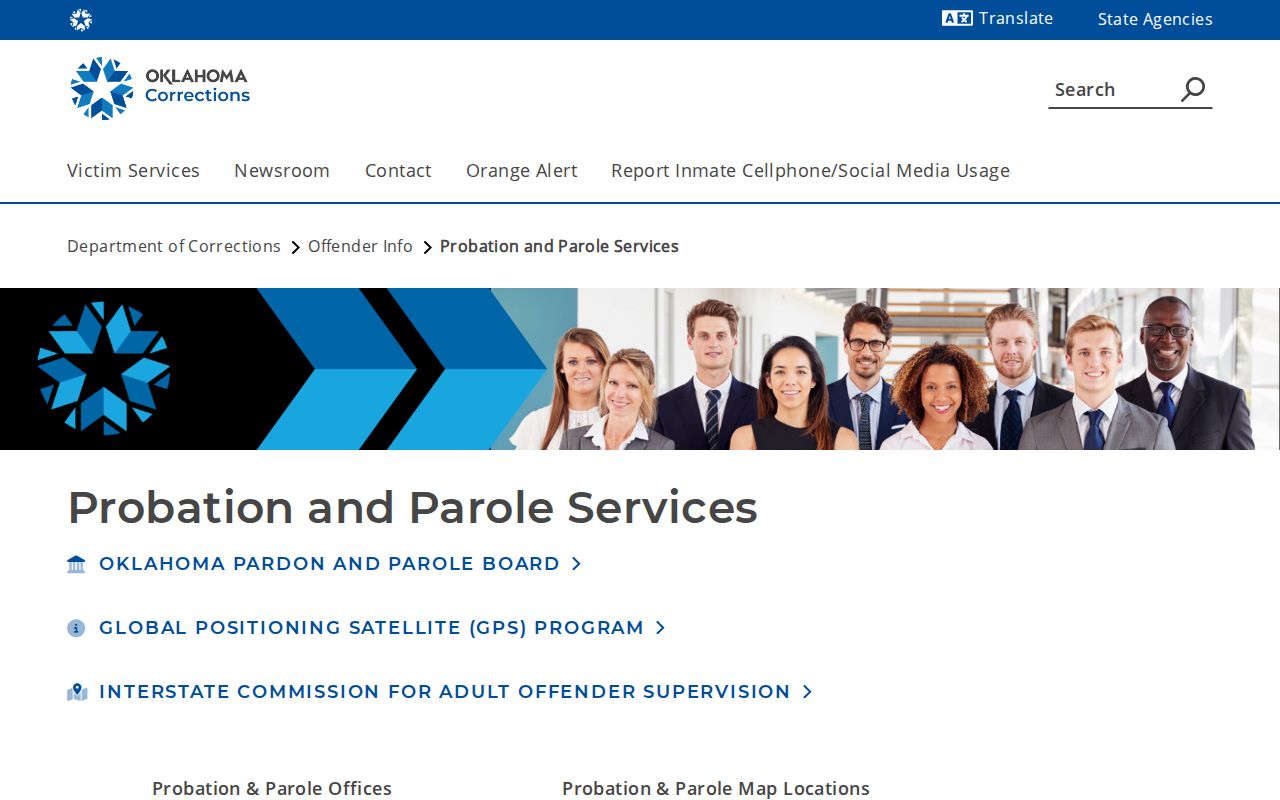
The source confirms regional assignment, not the status or reporting terms of a particular person.
One ODOC policy attachment instructs certain administrative-caseload offenders released early from another holding facility to report in person or by telephone within 72 hours. That rule is narrow. It is not a universal deadline for every Greer County parole or probation case. The written release papers and supervising officer’s direction control.
Note: Call the listed office to confirm routing because individual caseload assignments and disclosure limits can change.
Greer Parole Hearing Records
The Pardon and Parole Board generally meets monthly, often over two days, but a meeting may move or be cancelled. The current Board meeting calendar is the reliable starting point. At research time, it listed a regular August 10 and 11, 2026 parole meeting, plus separate correspondence and confirmation deadlines. Those dates are examples only. Always check the live annual and monthly resources.
The docket search accepts month, year, first name, last name, DOC number, and county, including Greer. Its visible year menu lagged behind current materials during research. If a year is absent, inspect the monthly docket PDFs and results page rather than concluding there was no case.
The Board meetings source shows the annual schedule and current meeting resources.
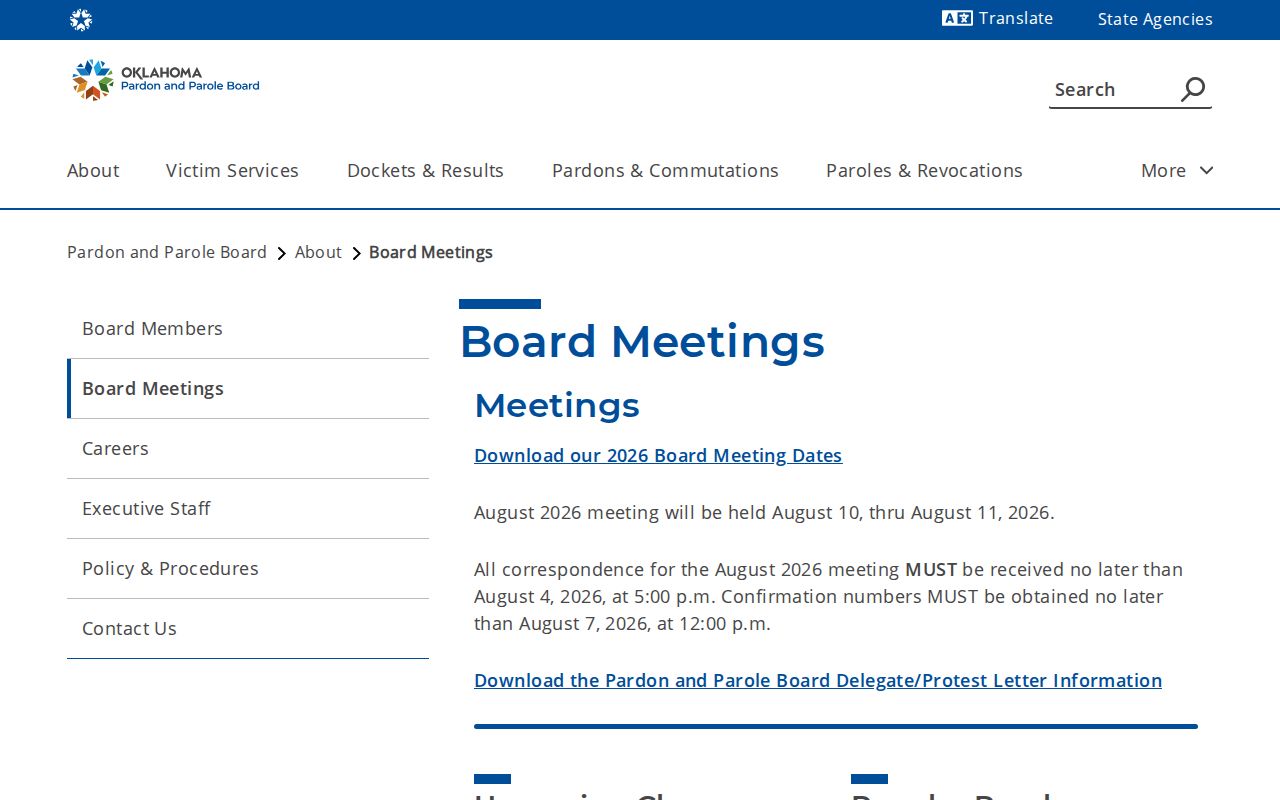
The calendar must be paired with the named person’s docket and the later result.
A docket proves only that review was scheduled. Board members vote, and the hearing-process page states that three favorable votes form a majority. Votes are not final until adjournment, after which staff validate and post results. A nonviolent case may be granted parole, while a violent-case vote may be a recommendation to the Governor. A pass moves the case to another docket. It is neither a denial nor a release.
From Greer Parole Vote to Release
Read the matching result after the meeting. An official outcome may grant parole, recommend it to the Governor, pass the case, or deny it. The Board describes typical reconsideration after denial as one year in nonviolent cases and three to five years in violent cases, but the statute and individual order control. Parole eligibility under 57 O.S. §332.7 is only an opportunity for review. For offenses listed in 21 O.S. §13.1, the separate eighty-five-percent floor may apply.
Even a favorable final action may carry a later implementation date. Check ODOC again for location, sentence row, supervision, and discharge information. VINE may report the later custody event, while Altus can verify Greer-area supervision. No one record should be made to answer all three questions.
The Board dockets and results page separates parole, administrative parole, commutation, SIR, and pardon materials.
Greer Supervision Warrants and Absconders
The public ODOC fugitives filter can flag alleged supervision or warrant status. It is not a live jail roster, and a listing is not a new conviction. Verify any match with ODOC. Do not attempt contact based on the web result. An absent name also does not prove that supervision ended without issue.
An ODOC warrant may stop the running of parole time while it remains outstanding. Later rulings about street time, credit, and partial or full revocation can change the chronology. A revocation means supervision was withdrawn or changed after an alleged violation and due process; it is not the same as an ordinary discharge.
The official fugitive-search source displays the filter and its database caution.
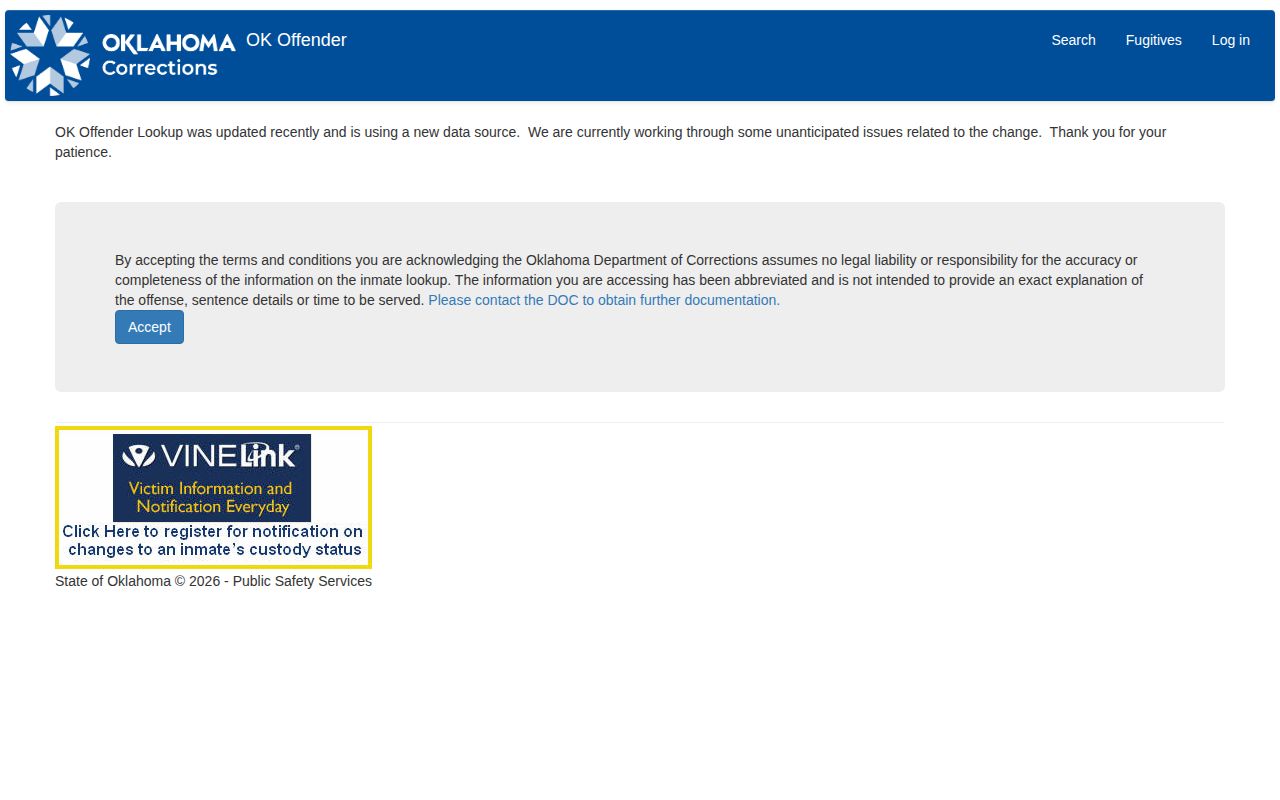
The screenshot is a search starting point, not proof of a current arrest location or final case outcome.
Conditions vary by order and may include reporting, approved residence or travel, treatment, fees, and compliance with laws. Public summaries cannot replace the signed terms. For a suspected violation, the warrant, court or Board record, and ODOC chronology explain what happened more reliably than rumor or a missing web result.
Note: An absconder listing concerns alleged supervision status and should never be described as a fresh conviction.
Greer Release IDs and Corrections
ODOC pre-release policy adds a practical Greer County release detail. Case managers are directed to begin work on a birth certificate, Social Security card, and photo identification within a year of projected release. The planning form inventories identifying documents and community needs. This preparation can help a person establish identity after leaving prison, but it does not confirm parole status or substitute for release papers.
Incorrect ODOC information has its own channel. The department publishes forms for reviewing or challenging individual department and criminal-history records through its Section 06 records process. A clear correction request should identify the person, DOC number, disputed field, and source document supporting the change. A court amendment should be tied to the right case and sentence row.
Supervision ends only through an official discharge, expiration, court order, or other authorized action. For proof, obtain the ODOC supervision chronology or discharge record and compare it with the court case. VINE is useful for custody alerts, not as a durable discharge archive.
A completed prison term does not always end parole on the same day, and a probation case may end through the court record rather than a prison discharge row. Ask ODOC for the dates that supervision began and ended, the office that held the case, and the final status the agency can disclose. Then compare those facts with the sentencing court. If a warrant stopped the running of parole time, the first expected end date may no longer be accurate.
Keep the record type clear when stating the result. “Released from prison on parole” means the person left confinement under supervision. “Discharged from ODOC supervision” means the documented supervision term ended. Neither phrase should be inferred from a roster no-result, an old docket, or a lone favorable vote.